01
Pipeline questions in plain English
Ask the CRM anything about your deals or contacts and get records back — owner, stage, last activity — not a summary you can't act on.
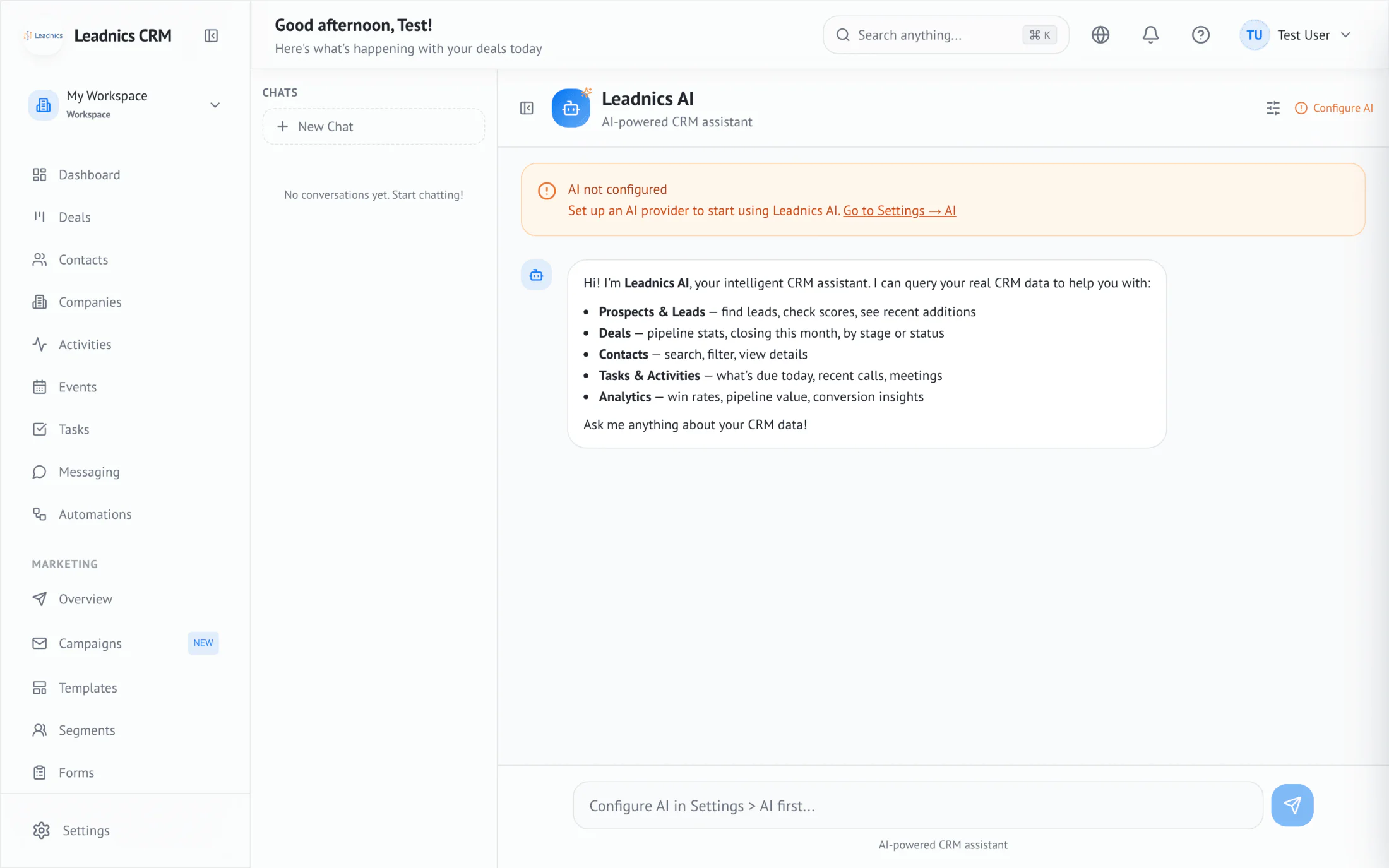
AI Features
Leadnics AI lives next to your pipeline, contacts, and inbox. Ask which deals slipped this week, draft the next email in context, or summarize a contact in 30 seconds. Every answer is grounded in your own records.
How it works
Ask plain-English questions: "$50K+ deals that slipped a stage this week" or "contacts I haven't touched in 10 days." Answers cite the exact records.
Draft a reply that references the last conversation, the open deal, and your team's tone. Promote a suggestion to a real send in one click.
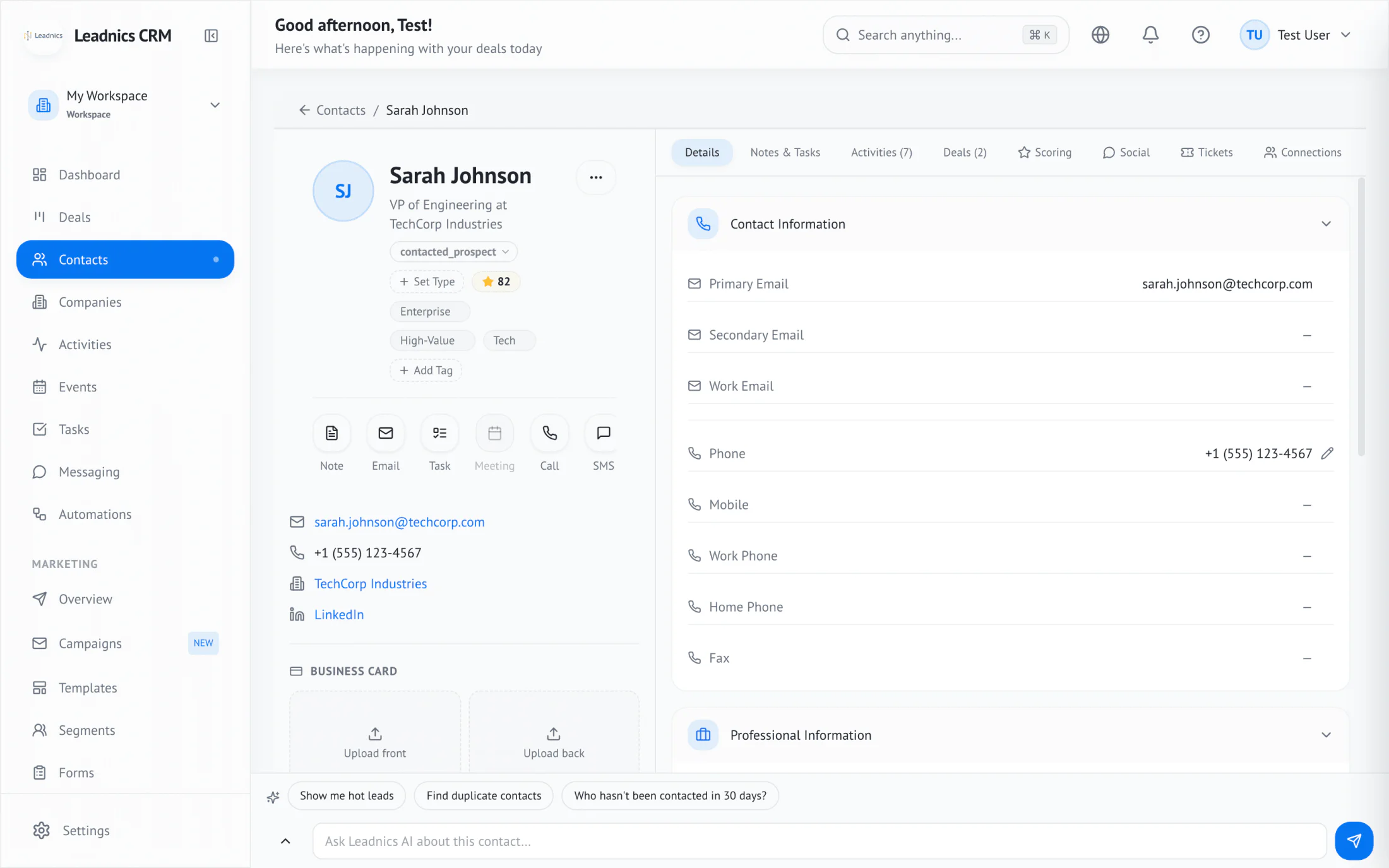
Open a contact and get a one-paragraph briefing: last touch, open deals, sentiment, recent company news. Your prep is done before the call connects.
Capabilities
Ask the CRM anything about your deals or contacts and get records back — owner, stage, last activity — not a summary you can't act on.
The assistant reads the thread, the deal stage, and recent activity, then drafts a reply that matches your team's voice.
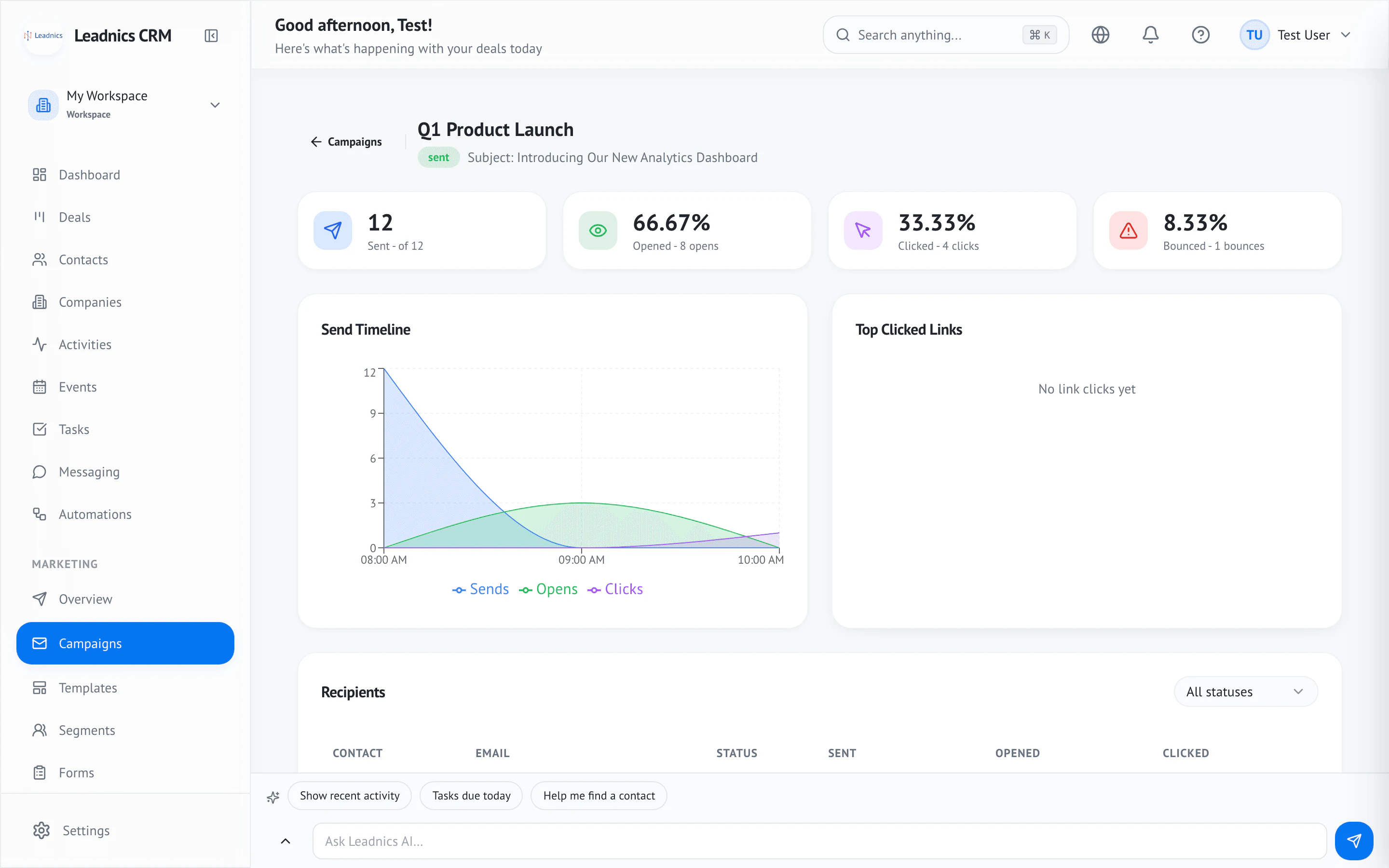
Open any contact for a TL;DR before the call: last touch, open deals, sentiment, news. No tabs, no scrolling.
Describe the audience you want; the assistant builds the filter, previews the count, and saves it as a reusable segment.

Hover a metric in your analytics dashboard and ask why it moved. The assistant breaks down which deals, reps, or segments drove the change.
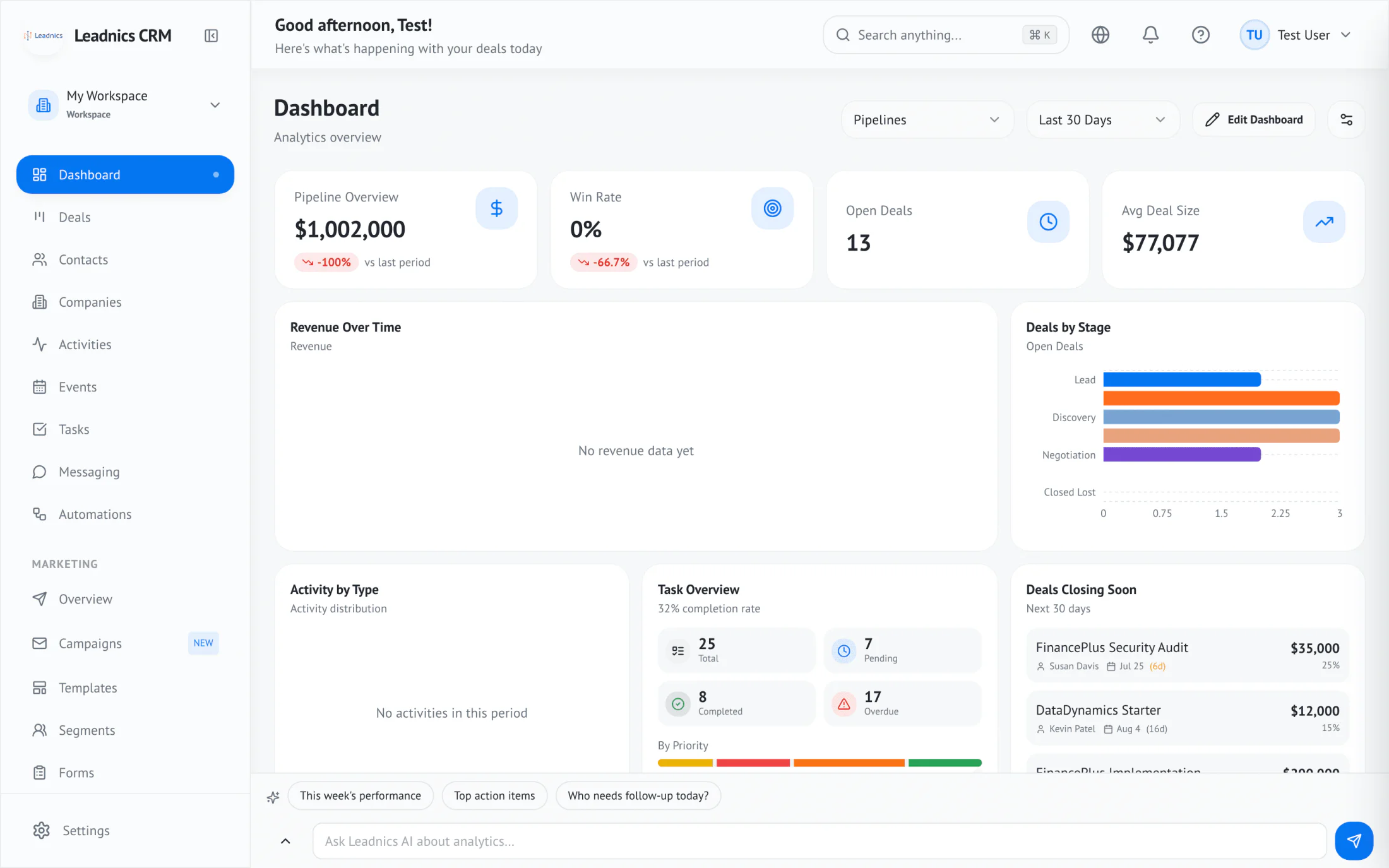
Every answer links to the contacts, deals, or activities it used. Click a citation to jump straight to the source record.
Questions
Leadnics is a CRM. The AI assistant is one feature of it, working alongside your pipeline, contacts, sequences, and inbox.
No. Your records stay inside your workspace. The assistant reads from your data to answer questions; nothing is sent back to train a foundation model.
Only when you confirm. Suggestions appear inline; promoting a suggestion to a real action — sequence enrollment, task creation, segment save — always requires a click.
The same records the user asking the question can see. Permissions, ownership, and team scopes are honored on every query.