01
Voice notes per contact
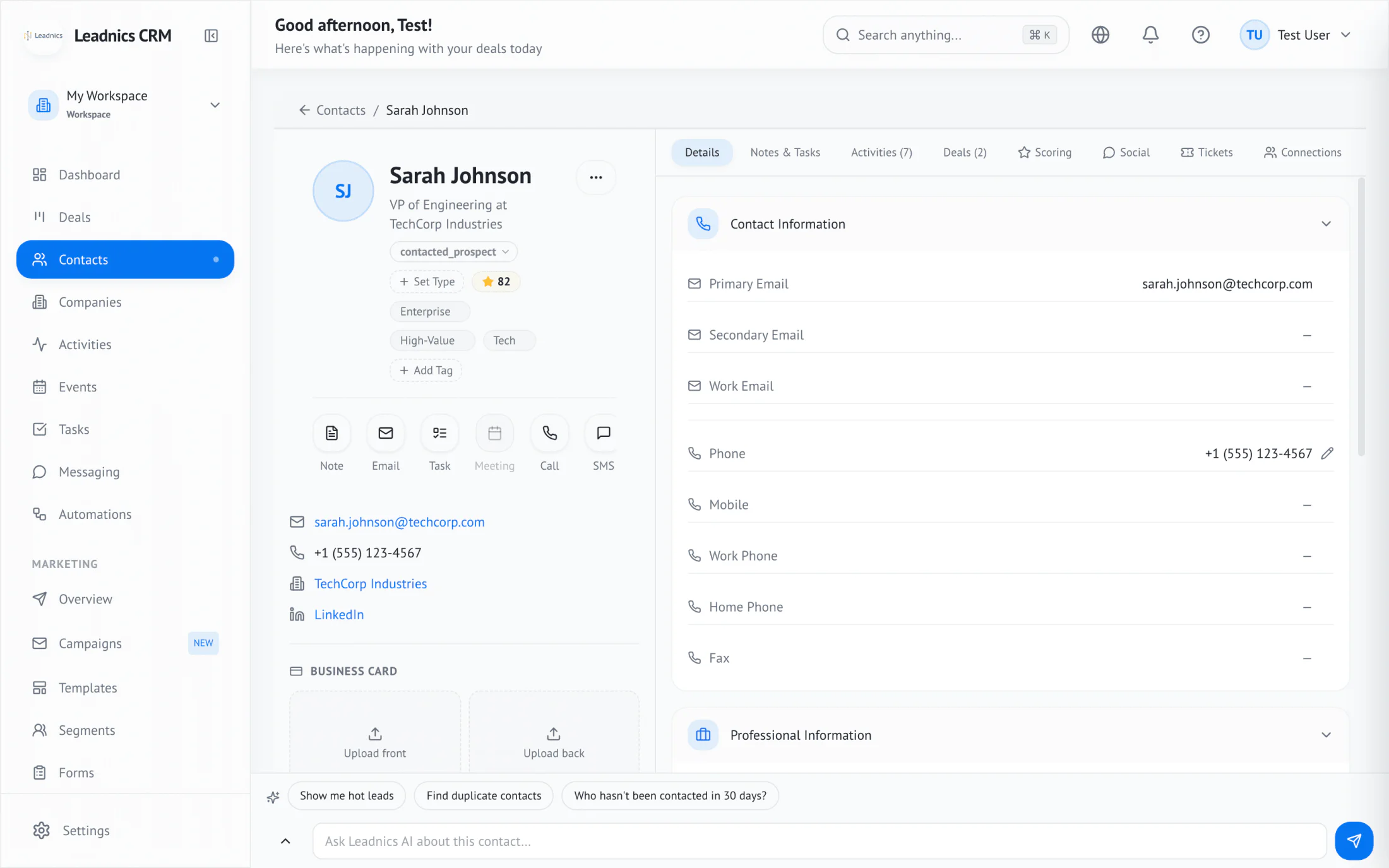
Tap the contact, hold to record, transcribed and timestamped on the record before the next session.
Use case
Capture an intro at the coffee bar, add the context that made it matter, and send a follow-up that night that reads like you remembered every word.
How it works
Add a contact in seconds — paste an email, scan a card, or dictate a voice note. The record stores who introduced you and what you spoke about.
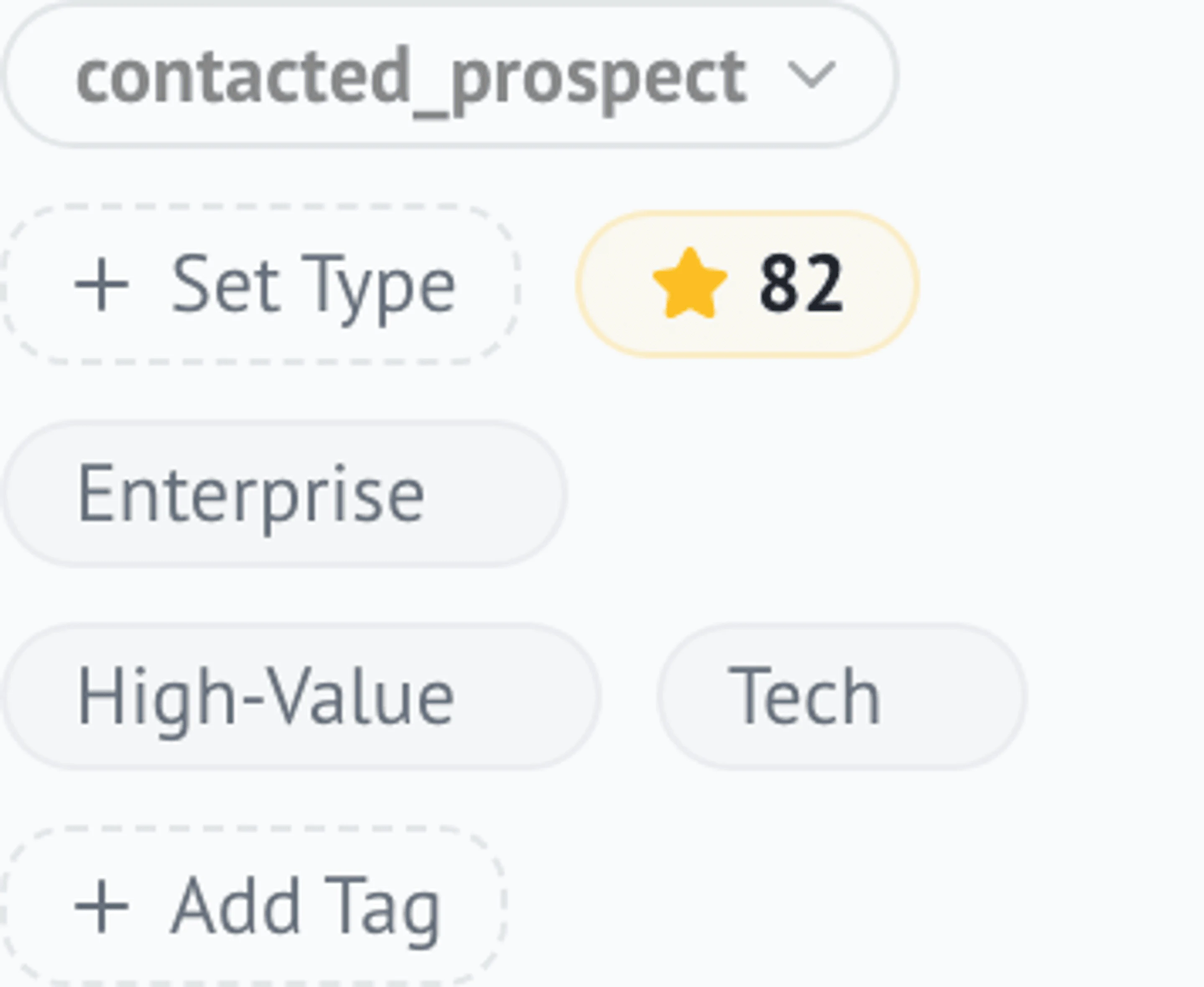
Mark fit, urgency, and warmth on a 1–5. The score sets the follow-up template and the deal value bracket before you leave the venue.
Daily digest at 6pm: every person you met, with a one-tap personalized email pre-drafted for review and send.
Capabilities
Tap the contact, hold to record, transcribed and timestamped on the record before the next session.
Three sliders — fit, urgency, warmth — feed both the deal probability and the next-step template.
See your network through the people you've already met and who introduced you to them.
Evening summary lists every contact added today with a pre-drafted email ready for a one-tap send.
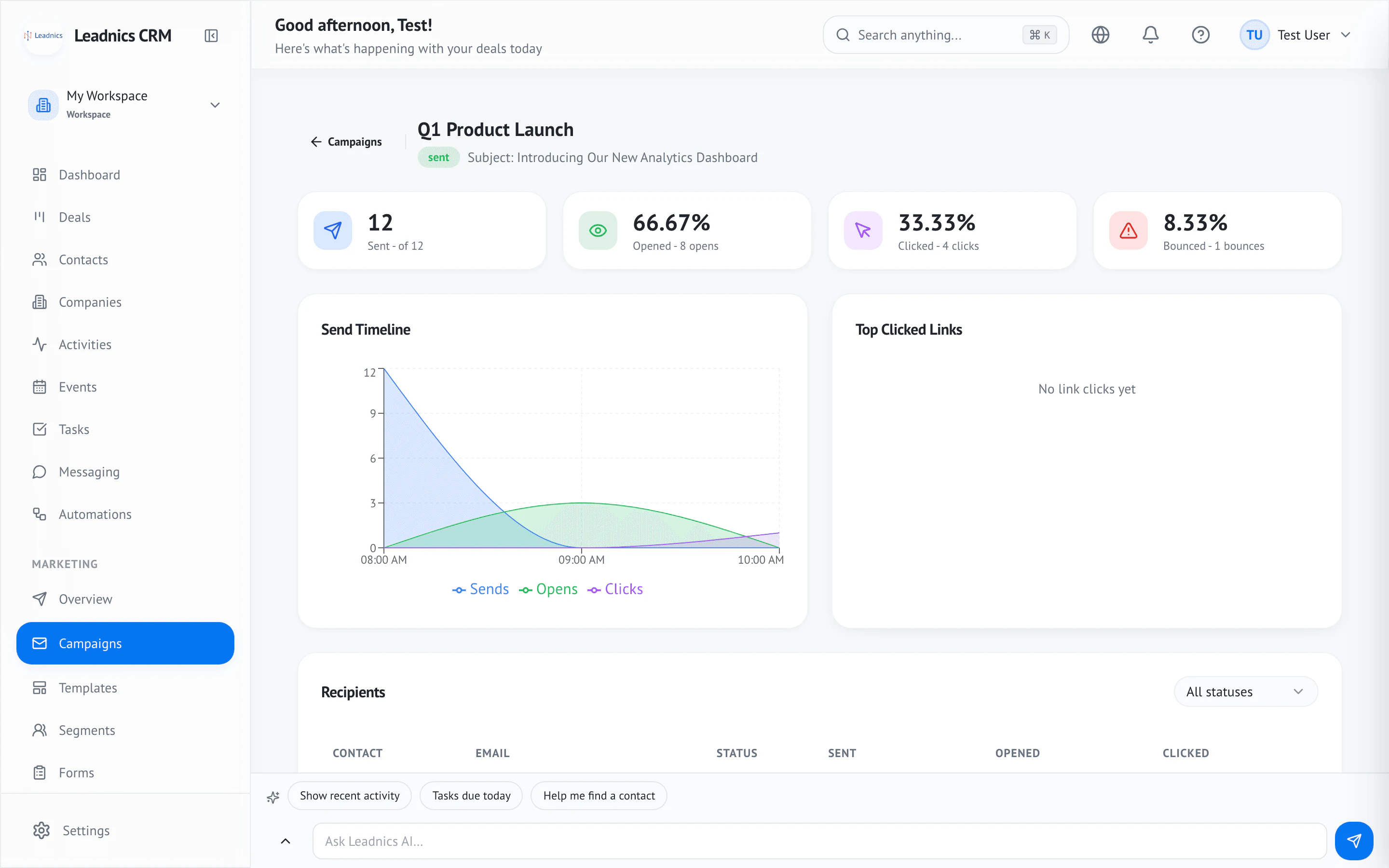
Tag contacts with the session, panel, or dinner they came from. Source ROI shows up by event later.
Questions
Yes — for high-value introductions, the value isn't volume, it's the quality of the follow-up. Voice notes and relationship scoring exist specifically for this.
Yes. Hold the record button on the contact card; transcripts attach automatically and feed the follow-up draft.
Voice-note transcripts populate the merge tags in the follow-up draft. The email references the actual things you spoke about.