The sequence graveyard
Most follow-up sequences fail the same way: eight steps of escalating desperation, sent on a timer, ending with the “should I close your file?” guilt email. Reply rates sink after step three, and every additional step spends goodwill the first email earned.
The fix is a shorter sequence with better branching.
Four steps is usually enough
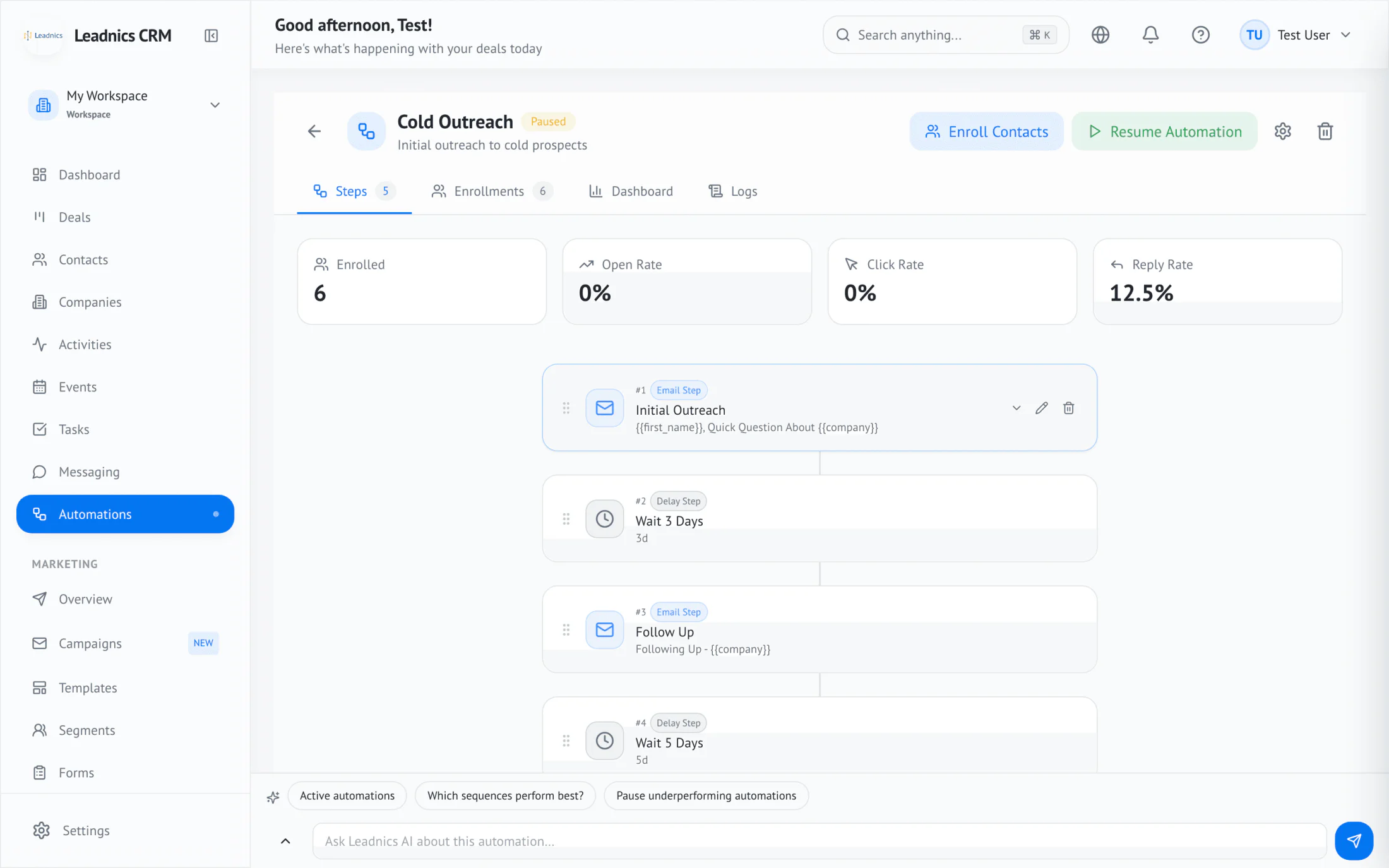
- Step 1 — context. Why you, why now. Reference the actual trigger: the event, the form, the referral. One ask.
- Step 2 (day 3) — value. Something useful with no strings: a relevant number, a short teardown, a customer story that matches their situation. The reply rate on “thought this was relevant” beats “just bumping this” every time.
- Step 3 (day 7) — the alternative ask. If a meeting was too big an ask, offer the smaller one: a two-line question they can answer from their phone.
- Step 4 (day 14) — the honest close. Say you’ll stop reaching out, leave the door open, no guilt. This email gets more replies than steps 2 and 3 combined — but only if it’s actually the last one.
Branch on behavior, not on hope
A sequence that ignores what the prospect does is a broadcast. The moves that matter:
- Opened the pricing page → route to a human. No automated step outperforms a rep with context and good timing.
- Replied → stop the sequence. Obvious, and yet the “sorry for the automated email you just got” apology is still the most common sequence bug in the wild.
- Bounced or out-of-office → pause and reschedule, don’t burn a step into the void.
The one metric that keeps you honest
Track replies per sequence enrollment, not open rates. Opens measure subject lines; replies measure whether the sequence deserved to exist. If a step’s reply contribution rounds to zero across a quarter, delete the step. Good sequences get shorter over time.
Automation earns its keep when every email in it reads like one a decent rep would have sent by hand, delivered on time without fail.