Why speed beats polish
Most trade-show leads never hear from the company again. Of those that do, the average first touch lands five days after the event — long after the prospect has stopped associating your name with the conversation you had.
The research on lead response time is blunt: the odds of qualifying a lead drop dramatically after the first hour, and keep falling from there. A short, imperfect email sent the same evening outperforms a polished sequence sent the following week.
The problem is rarely motivation. It’s logistics. Badge scans live in the event platform’s export. Business cards live in a jacket pocket. Notes live in someone’s phone. By the time all of that is merged, deduplicated, and typed into the CRM, the window has closed.
The same-day system
The teams that win at events all run some version of the same play:
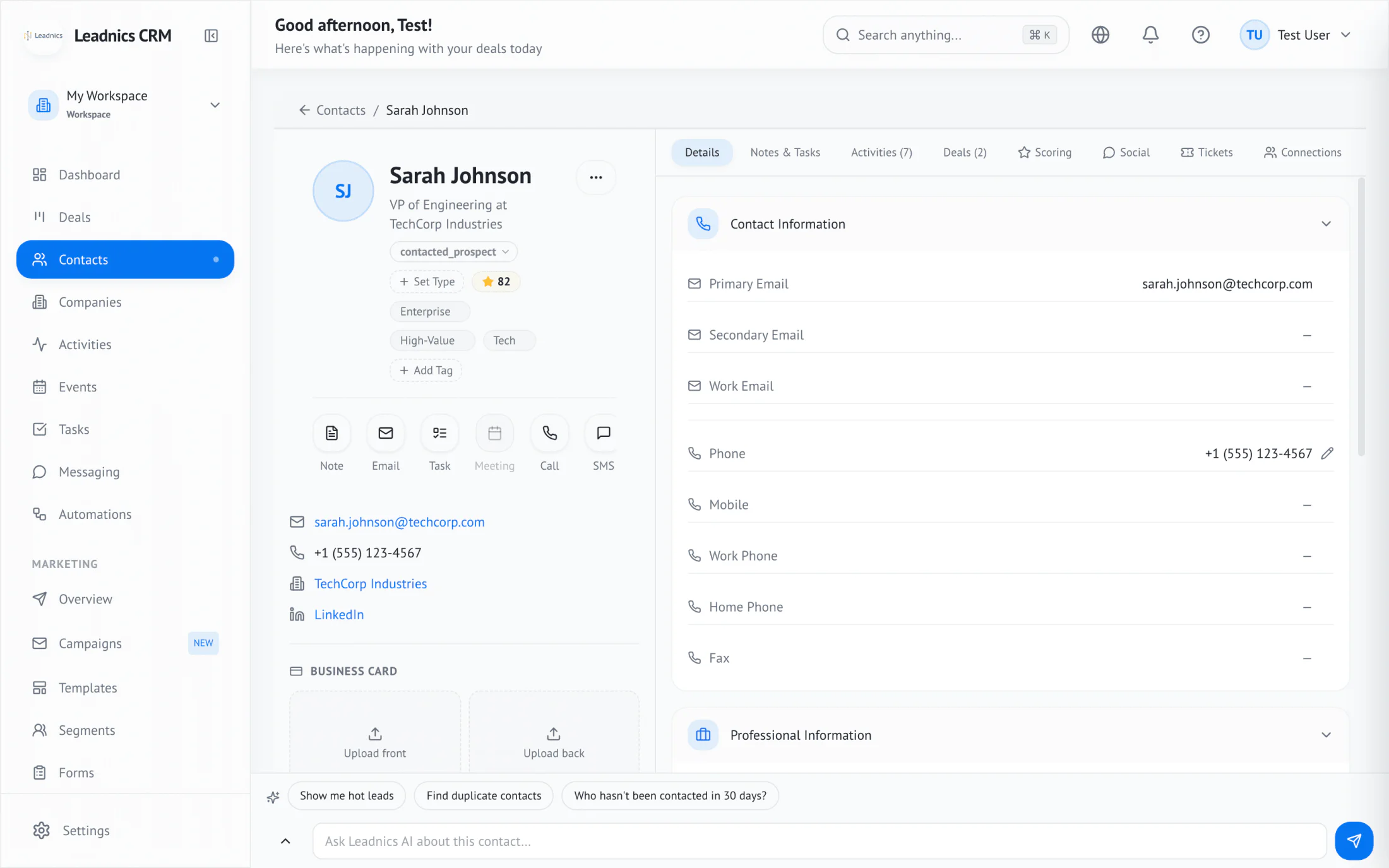
- Capture straight into the pipeline. Every scan or card should land in the CRM as a contact with a source tag — not in a spreadsheet that needs processing later. If capture takes more than one step, reps will batch it, and batching means delay.
- Tag interest at the booth. One tap — which product line, how warm, who should own it. Thirty seconds at capture saves a triage meeting later.
- Let the first touch send itself. A short sequence keyed to the interest tag goes out that evening: reference the event, one line of relevance, one clear ask. No brochure attachments.
- Route hot leads to a human immediately. Anyone who asked about pricing or invited a follow-up call gets a personal email from the rep who met them — before the booth is packed up.
What to write in that first email
Keep it under ninety words. Name the event, name the thing you talked about, propose one specific next step. A calendar link beats “let me know your availability.” Skip the “great to meet you” throat-clearing — the subject line already did that.
Measure the decay yourself
Pull your last event’s leads and chart reply rate against first-touch delay. Most teams find a cliff somewhere between 24 and 48 hours. Once you’ve seen your own cliff, the case for same-day automation makes itself.
A clever follow-up sent late loses to a plain one sent tonight.