The spreadsheet tax
Every team that sells in person pays it. Someone comes back from an event with 200 badge scans, a stack of cards, and a phone full of photos. Then the tax collection starts: an afternoon of typing, guessing at illegible titles, and reconciling duplicates against the CRM.
The visible cost is the afternoon. The invisible cost is worse — every day between capture and entry is a day the lead isn’t in a sequence, isn’t scored, isn’t visible to the team, and isn’t getting followed up.
What “capture” should actually mean
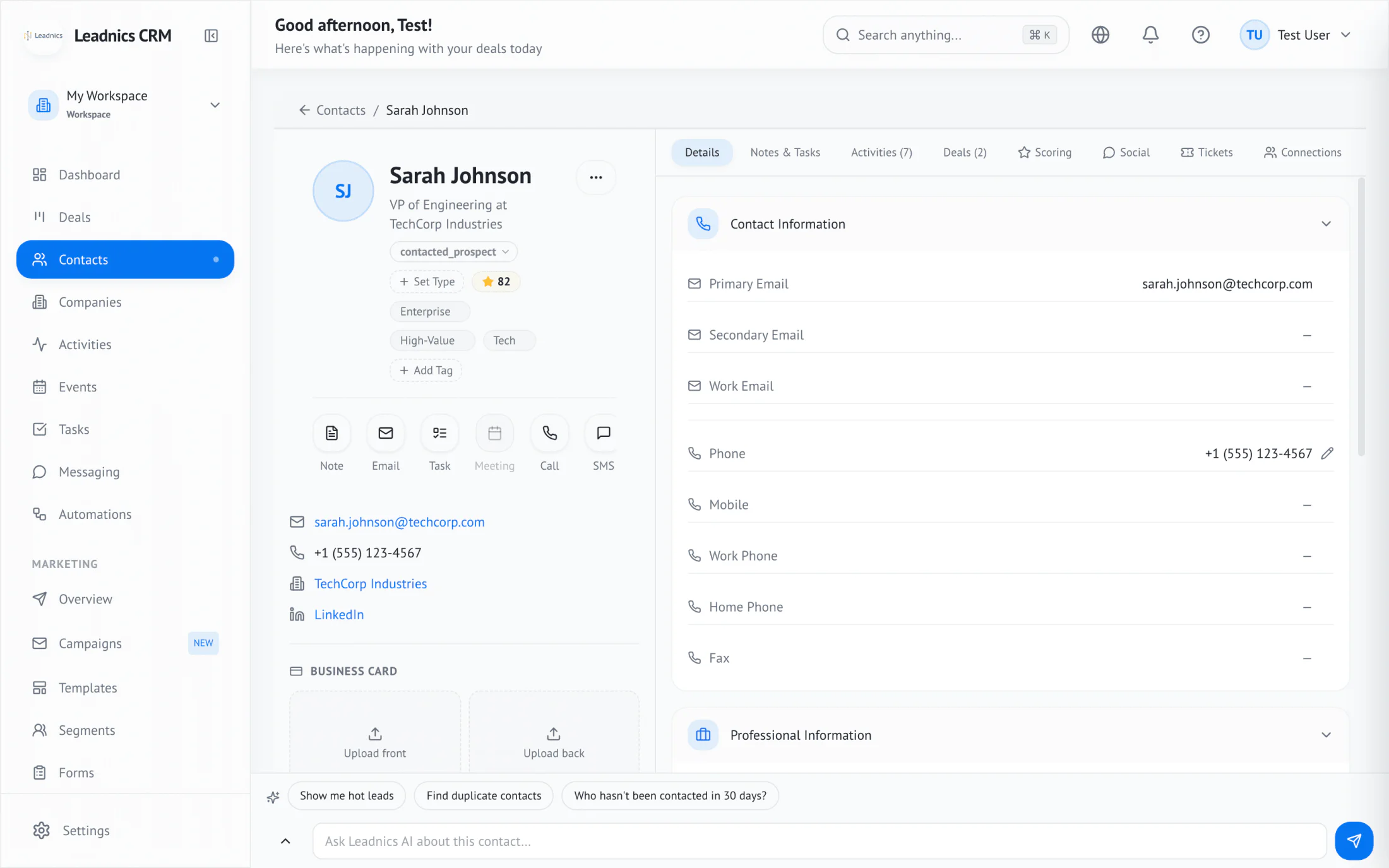
A captured lead should land as a CRM contact that is:
- Enriched — company, title, and firmographics filled in automatically, not typed from a card.
- Deduplicated — matched against existing contacts before it creates a mess, not after.
- Attributed — tagged with the event, booth, and rep, so pipeline reports can answer “was that show worth it?”
- In motion — dropped into a follow-up sequence or assigned to an owner the moment it exists.
If any of those steps happen “later,” they happen inconsistently. Teams with clean pipelines simply removed the step where discipline was required.
The two-tap standard
The bar for field capture is two taps: scan, confirm. Anything more and reps under pressure will default to the pocket-full-of-cards method, and you’re back to paying the tax.
That standard has a knock-on effect on data quality. When capture is instant, the context is still fresh — the interest tag is accurate, the note is specific, the priority is honest. When entry happens three days later, every lead is “seemed interested, follow up.”
Where the pipeline changes
Teams that move capture to the handshake see the difference in two places. First, volume: leads that would have evaporated in the backlog actually enter the pipeline. Second, speed: first-touch time drops from days to hours, which is where reply rates live.
Once capture happens at the handshake, there is nothing left for the spreadsheet to do.